Cloud adoption is advancing across communications, infrastructure and business applications, but migration plans do not always translate into completed transformation. AVANT’s 2024 State of Disruption report draws on a survey of 501 U.S. enterprise decision makers to examine adoption, organizational readiness and the role of trusted advisors.
501
U.S. enterprise decision makers surveyed
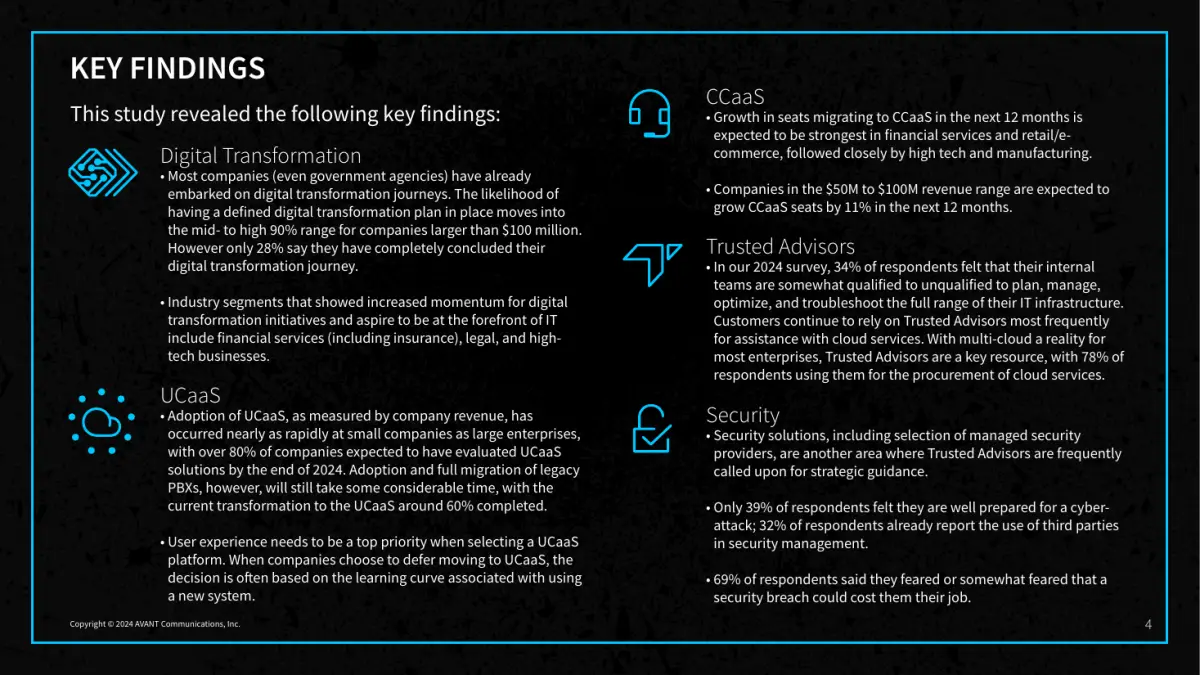
92%
Respondents with transformation plans underway
78%
Respondents using advisors for cloud procurement
39%
Respondents very prepared for a cyberattack
Understand what the survey measures
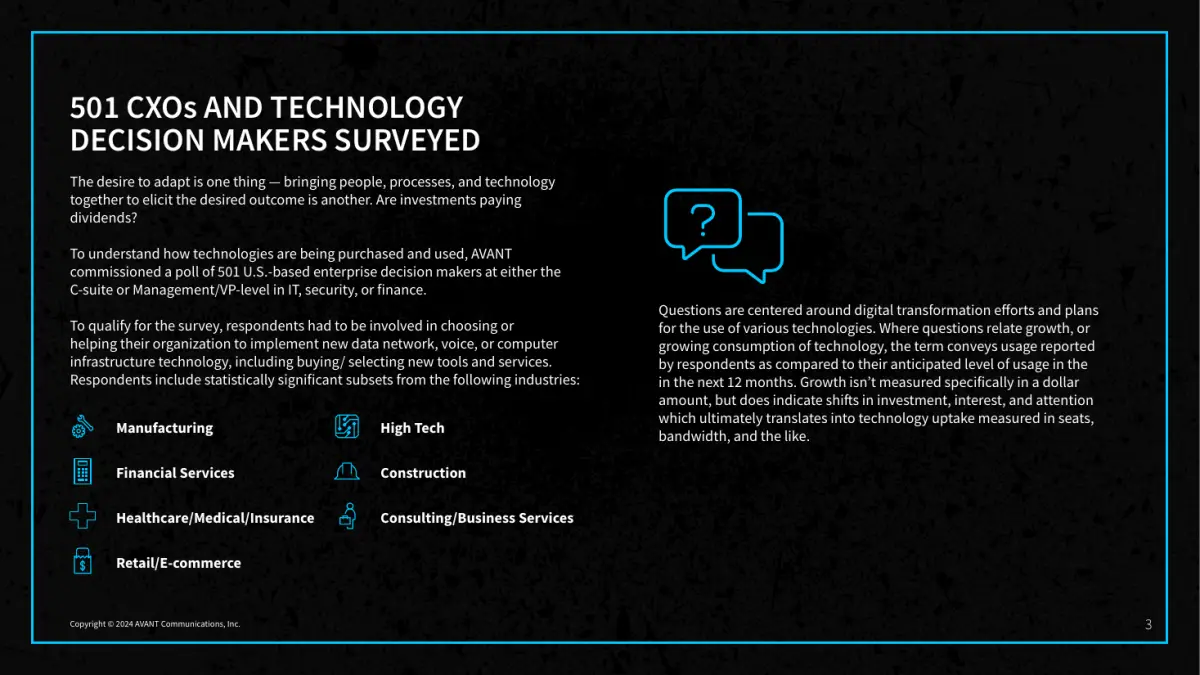
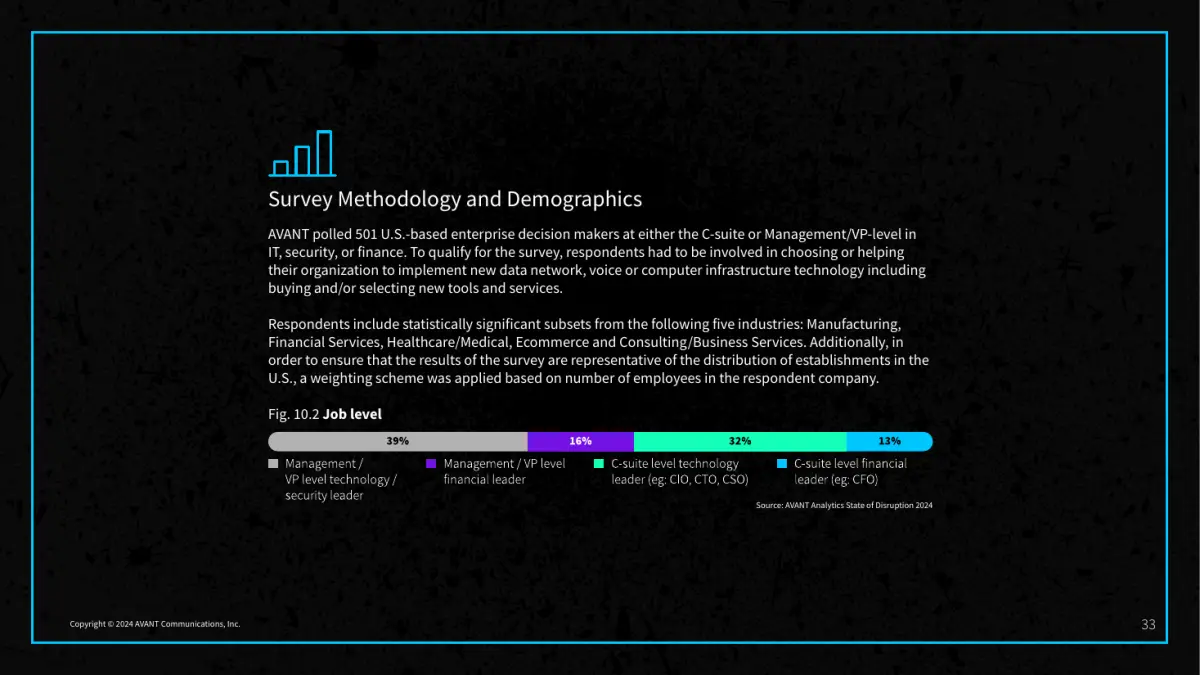
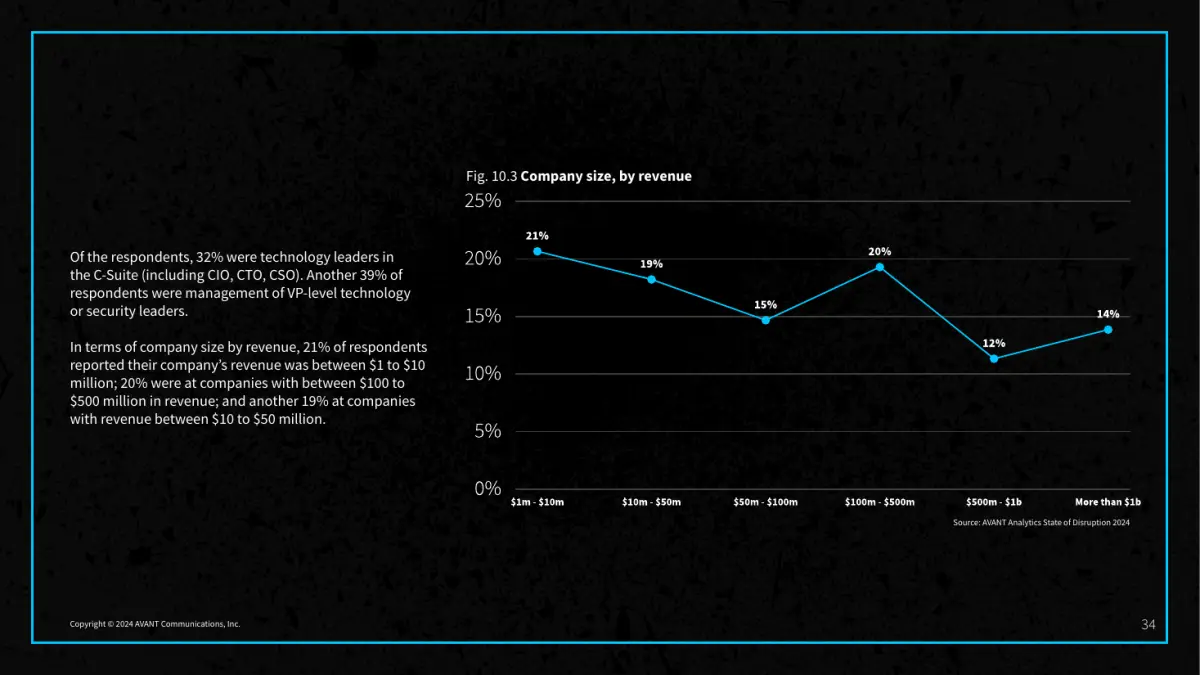
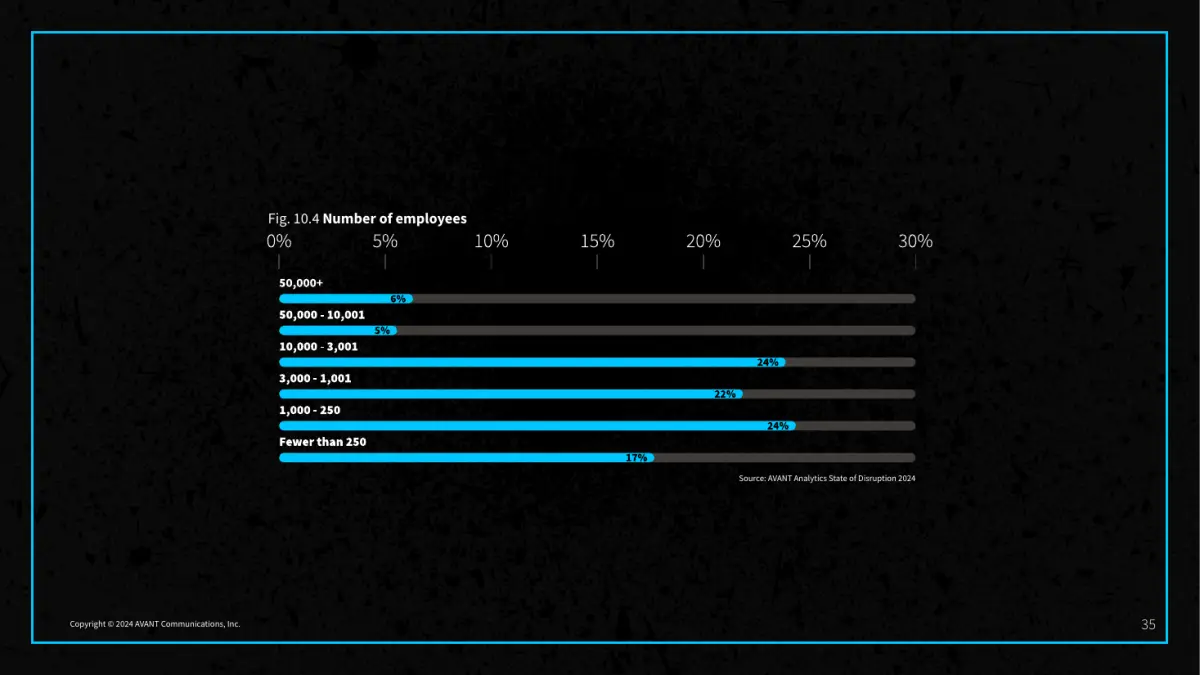
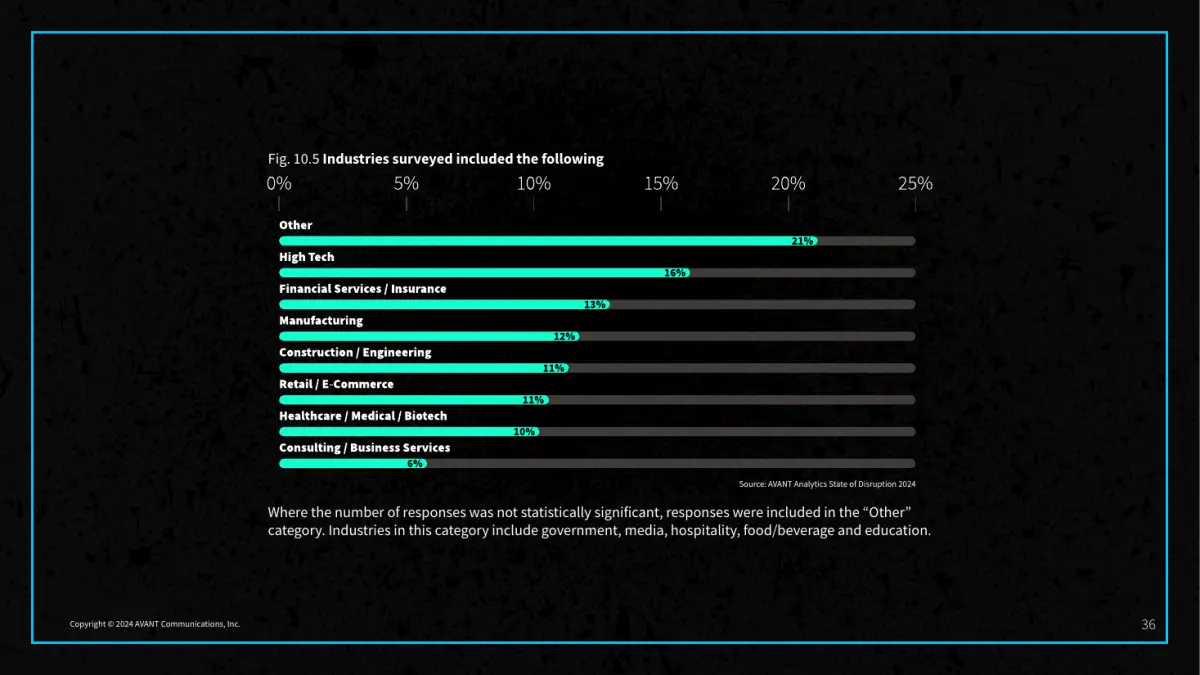
AVANT surveyed U.S.-based C-suite and management or VP-level decision makers in IT, security and finance who helped select or implement network, voice or computing infrastructure. Results were weighted by company employee count to reflect the distribution of U.S. establishments.
The report compares pre-pandemic adoption, usage at the time of the survey and expectations for the following 12 months. Growth generally means expected changes in consumption—such as seats, employees served or equipment migrated—not spending or verified market growth. Its 2024 projections should therefore be read as respondents’ expectations, not confirmed outcomes.
Transformation is widespread, but completion remains uneven
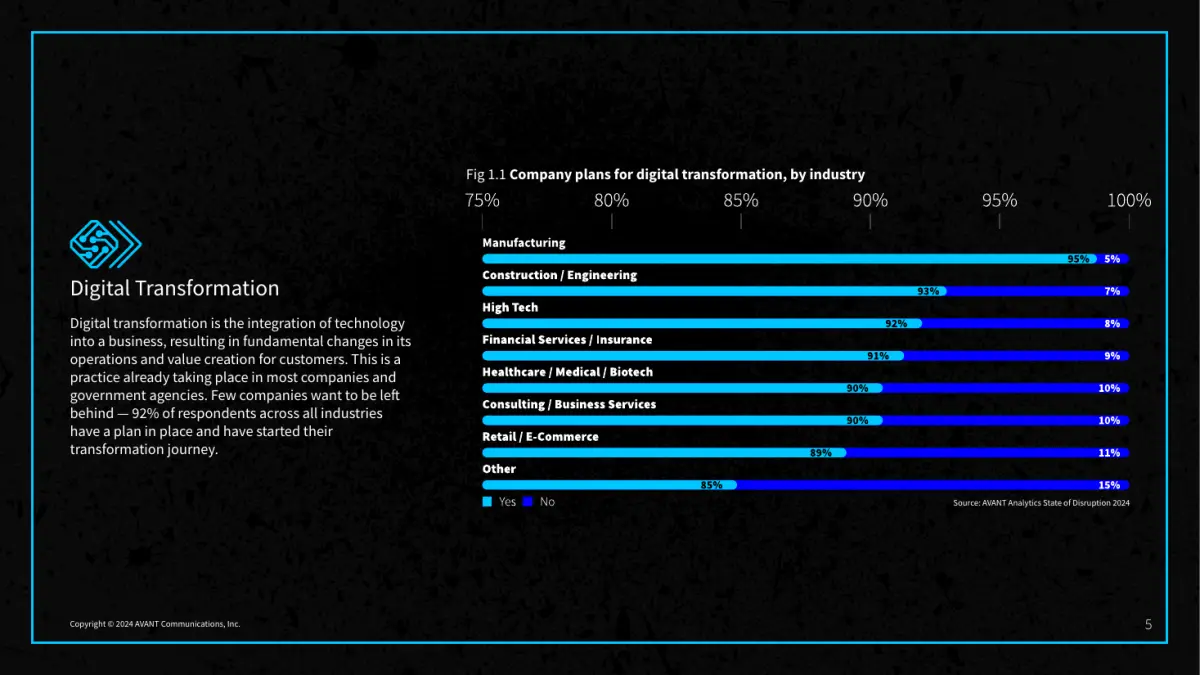
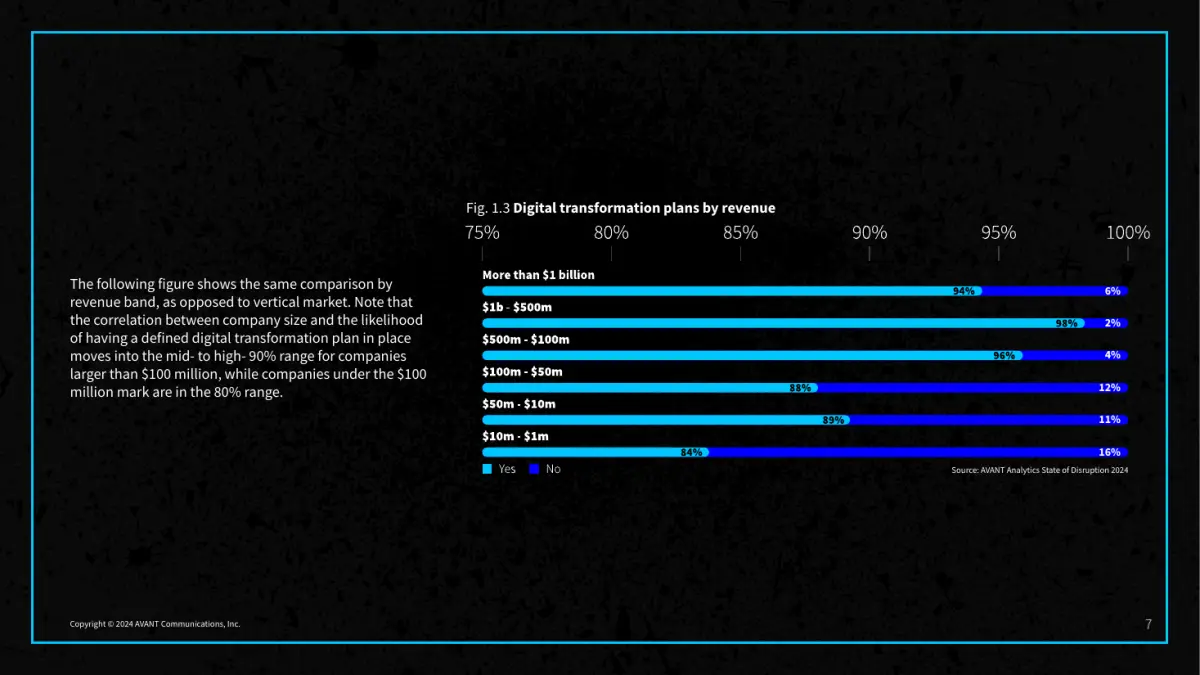
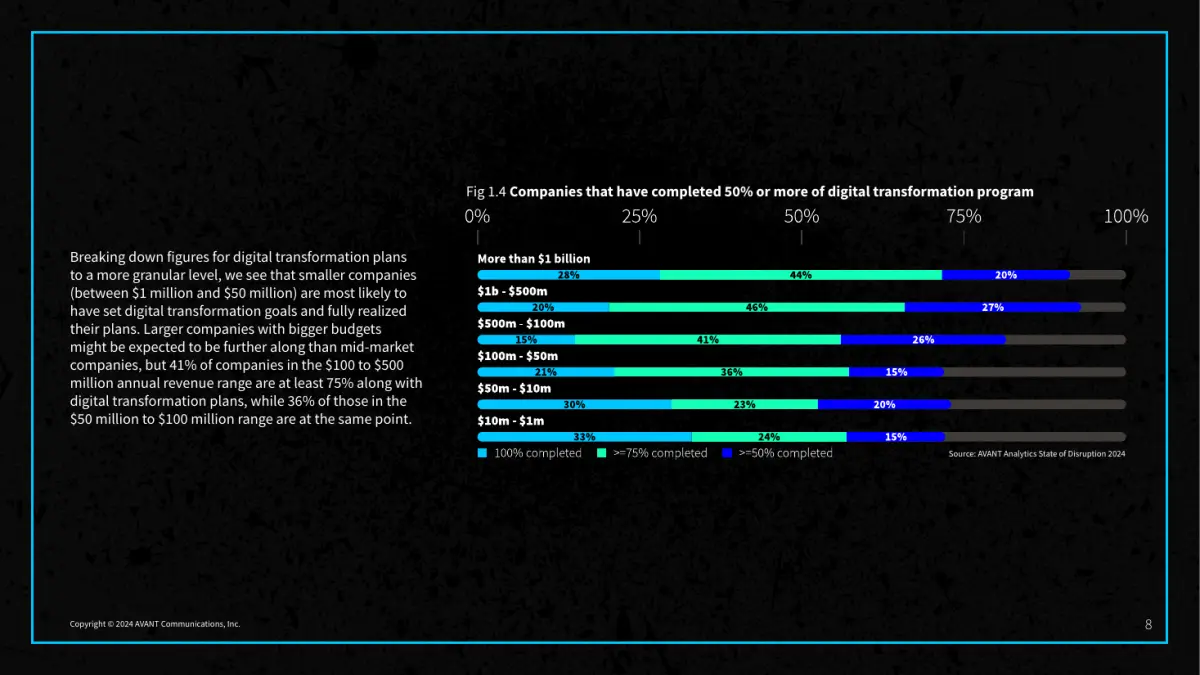
Across industries, 92% of respondents had a digital transformation plan and had started their journey. Companies with revenue above $100 million were more likely to have defined plans, with adoption in the mid-to-high 90% range, compared with the 80% range among smaller businesses.
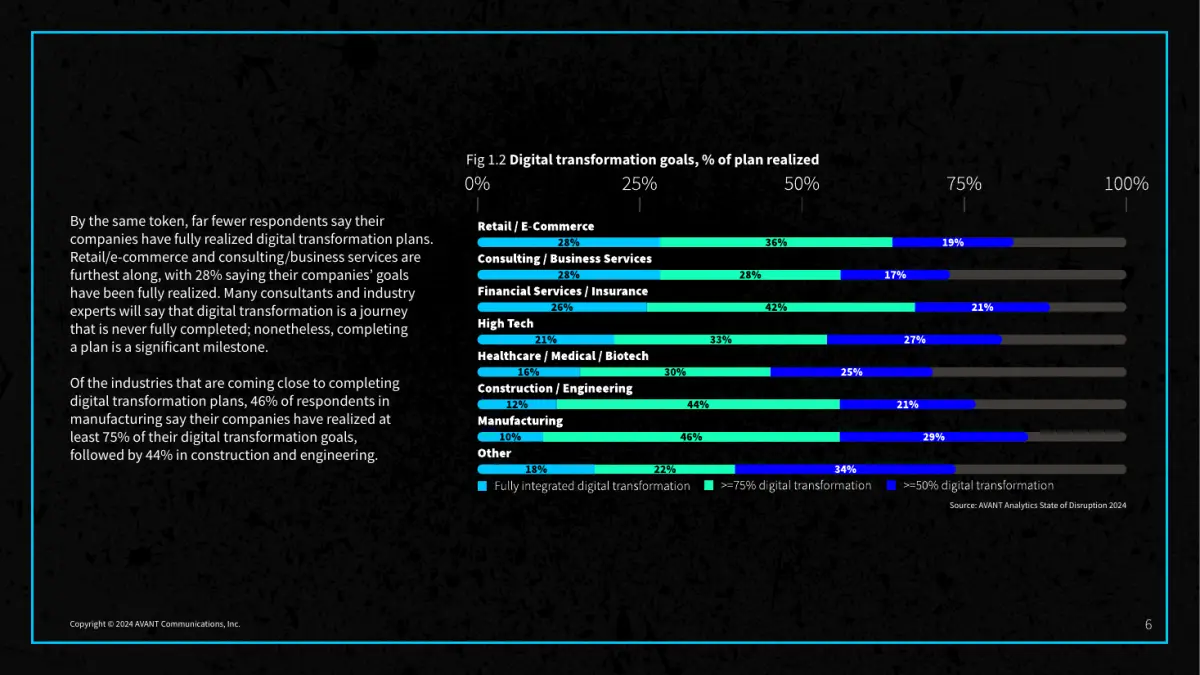
Progress varied by industry and scale. Retail/e-commerce and consulting/business services were furthest along in fully realizing their goals, at 28% in each segment. In manufacturing, 46% had realized at least three-quarters of their goals, followed by 44% in construction and engineering.
The report frames investment against economic uncertainty and an emphasis on cost savings and revenue protection. It suggests that operating-expense-based services can continue gaining adoption even when organizations defer larger transformation projects.
Innovation appetite differs by sector
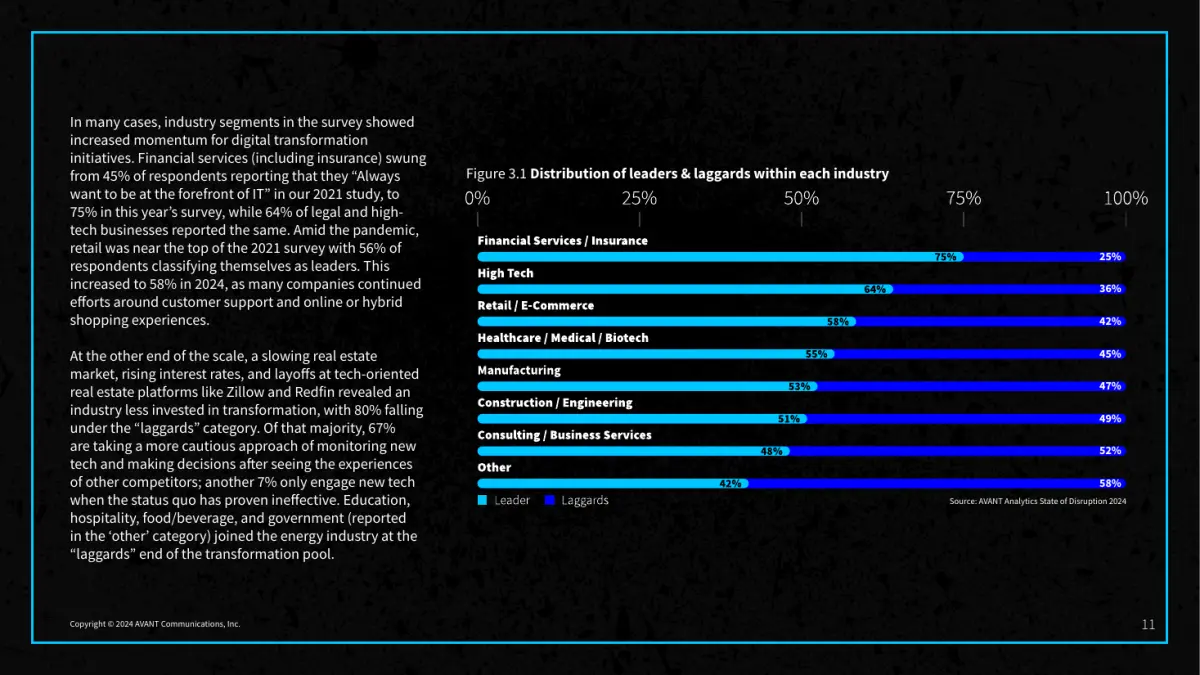
Financial services, including insurance, showed a substantial shift toward technology leadership: 75% wanted to be at the forefront of IT, compared with 45% in the 2021 study. Legal and high-tech businesses each reached 64%, while retail increased from 56% to 58%.
Real estate was more cautious, with 80% classified as laggards in the report. Energy and the grouped education, hospitality, food and beverage, and government categories also appeared toward the cautious end. These differences make industry context important when benchmarking transformation priorities.
Trusted advisors help bridge skills and implementation gaps
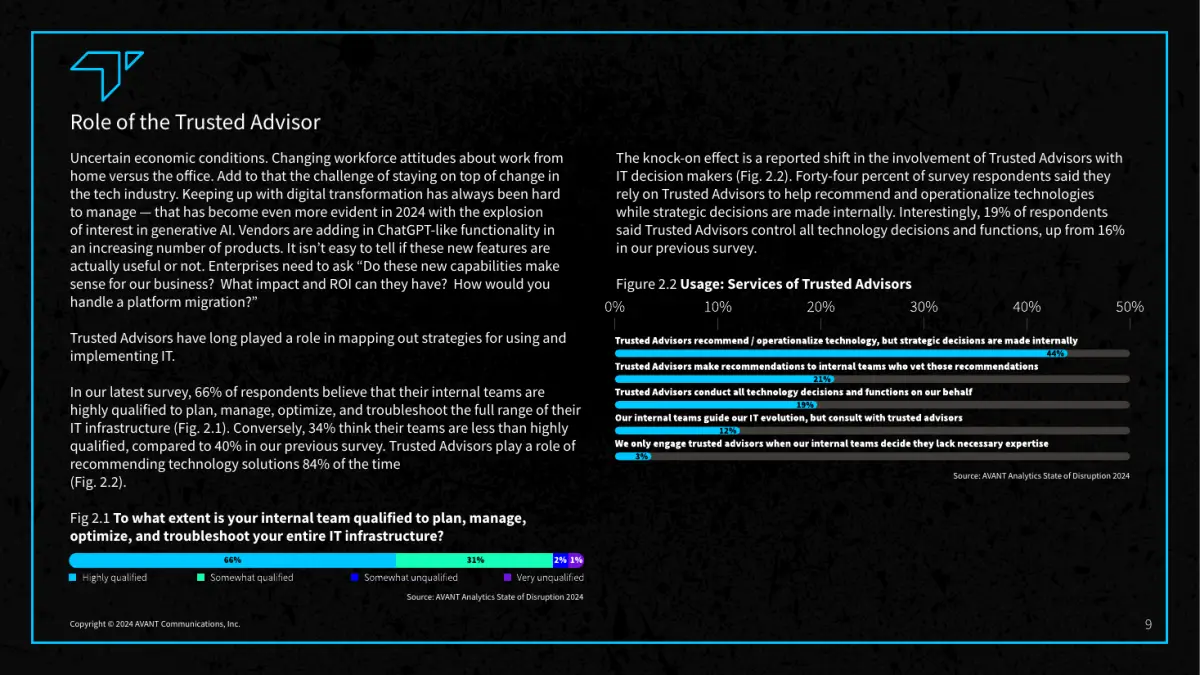
Thirty-four percent of respondents rated their internal teams somewhere between somewhat qualified and unqualified to plan, manage, optimize and troubleshoot their entire infrastructure. Forty-four percent used trusted advisors to recommend and operationalize technologies while retaining strategic decisions internally.
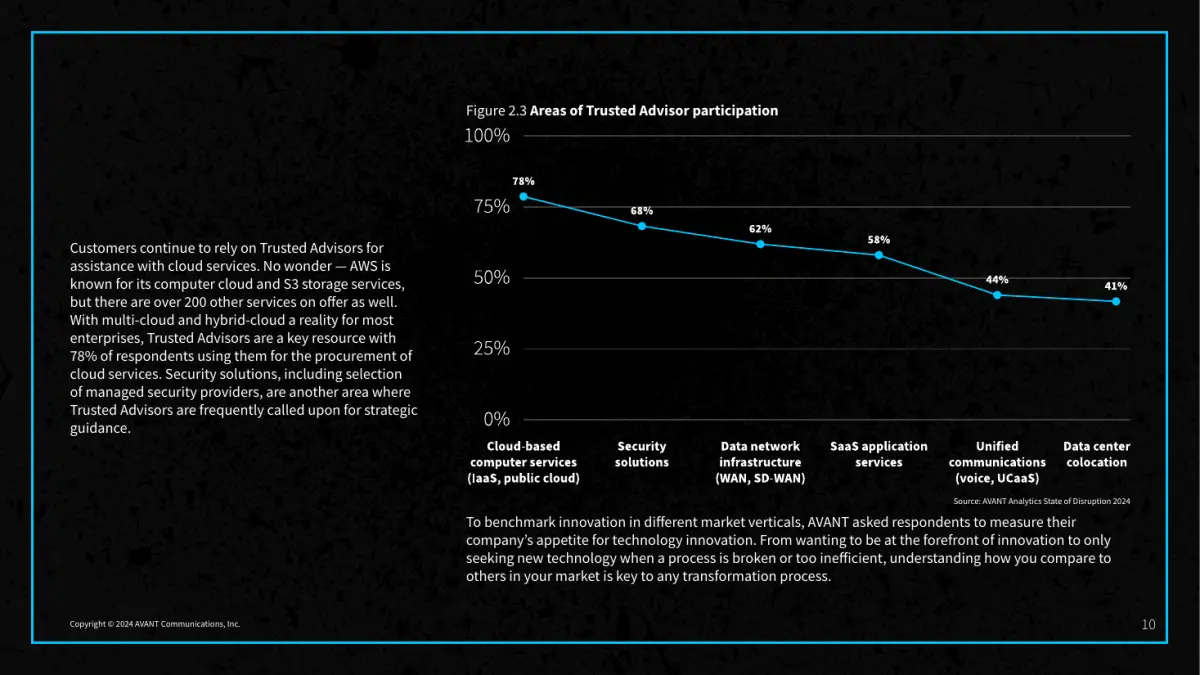
Another 19% said trusted advisors controlled all technology decisions and functions, up from 16% in the previous survey. Cloud procurement was a leading use case, with 78% using advisors; security and managed security provider selection were other important areas.
The report also urges buyers to examine the business value of new generative AI features rather than assume that adding AI justifies a purchase. Capabilities, ROI and migration requirements should guide evaluation.
UCaaS migration depends on adoption as well as technology
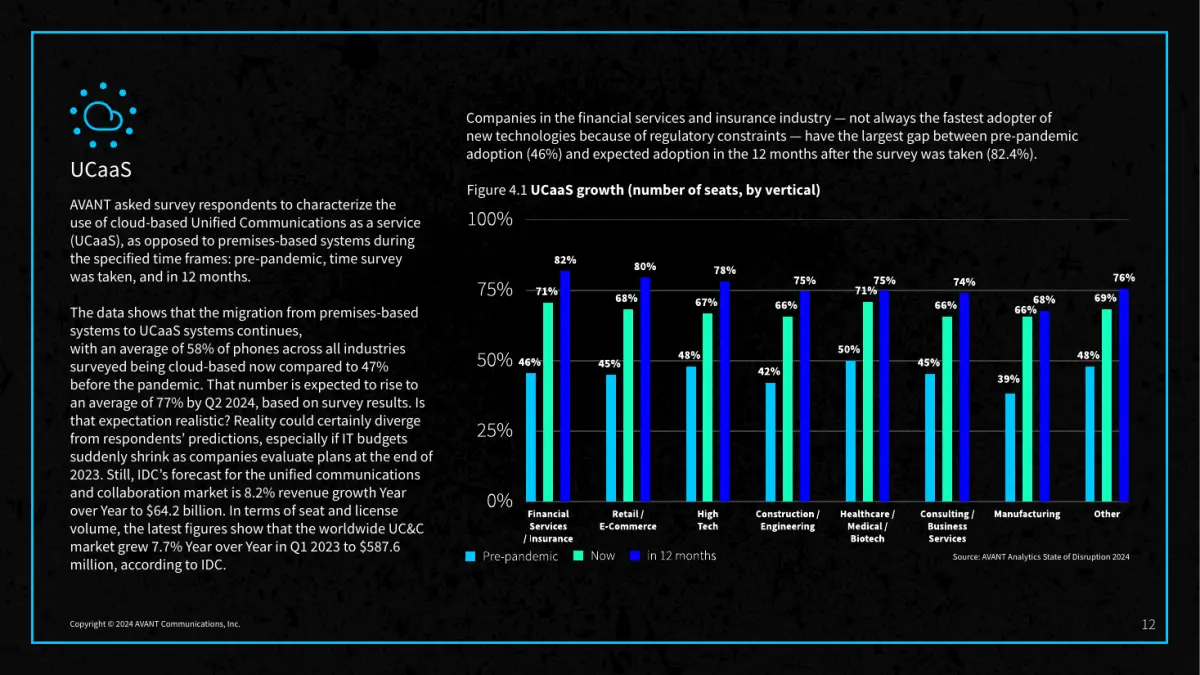
Unified communications as a service continued replacing premises-based phone systems. Across industries, respondents reported an average of 58% of phones in the cloud, compared with 47% before the pandemic, and expected an average of 77% by Q2 2024. The report explicitly cautions that budget changes could prevent those expectations from being realized.
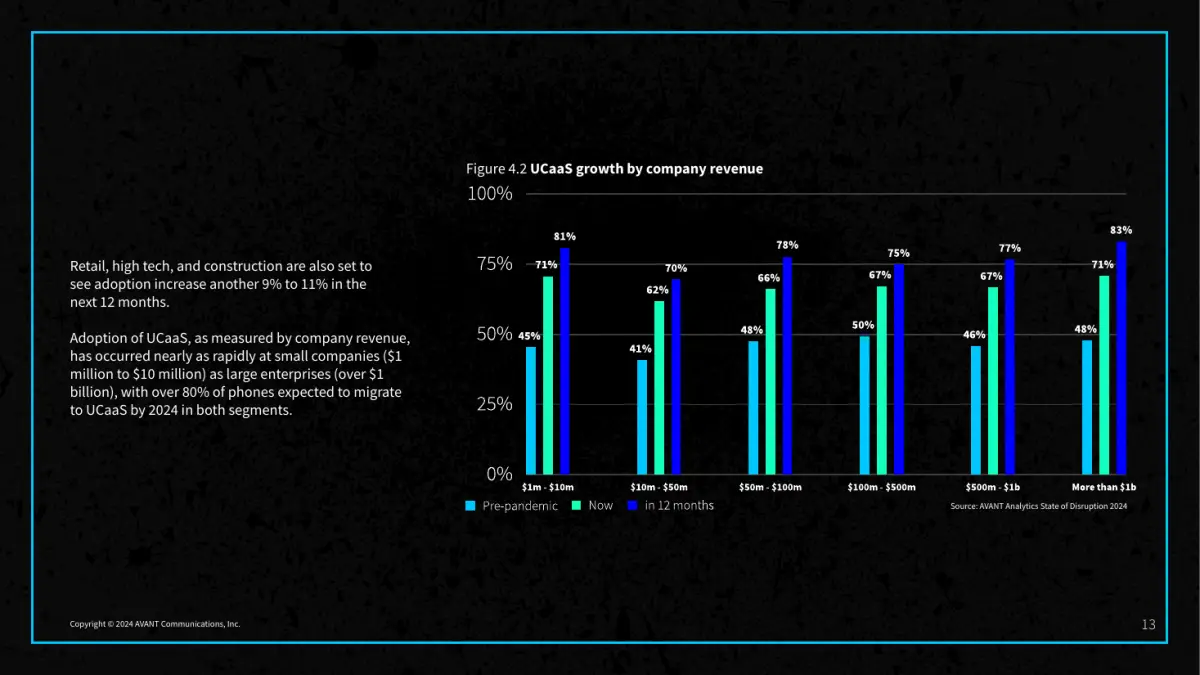
Among companies with $50 million to $100 million in revenue, cloud phone seats were expected to move from 68.8% to 78.4% over the next 12 months. Financial services and insurance showed a particularly large gap between pre-pandemic usage and expected adoption.
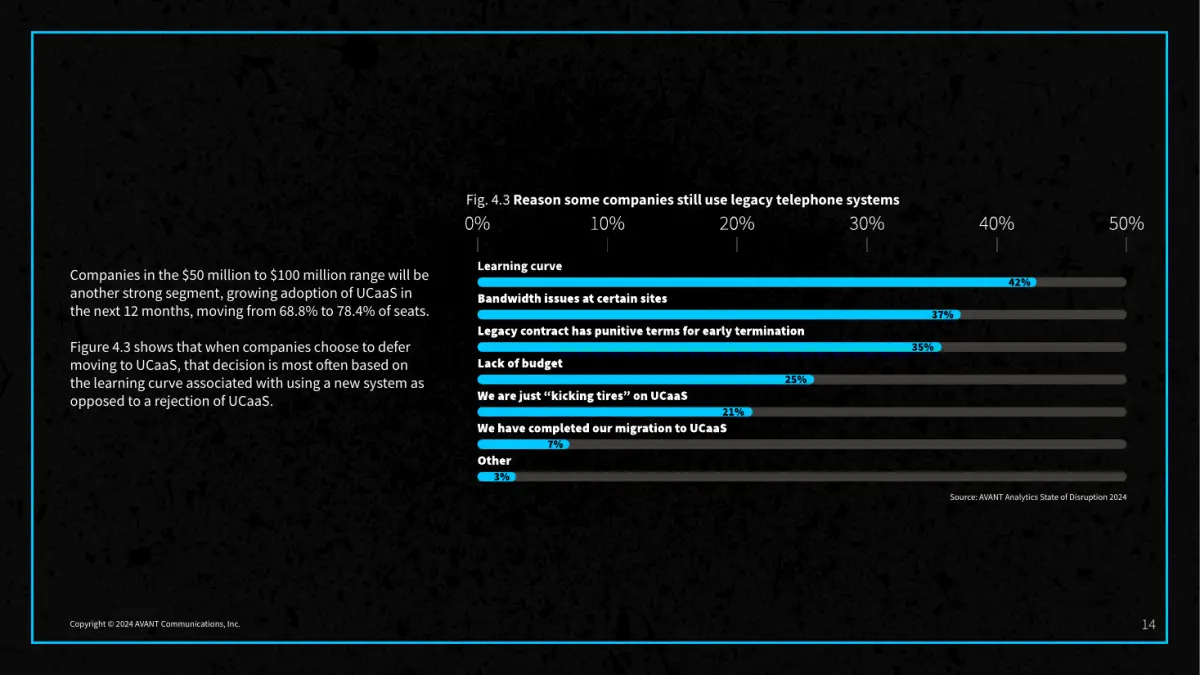
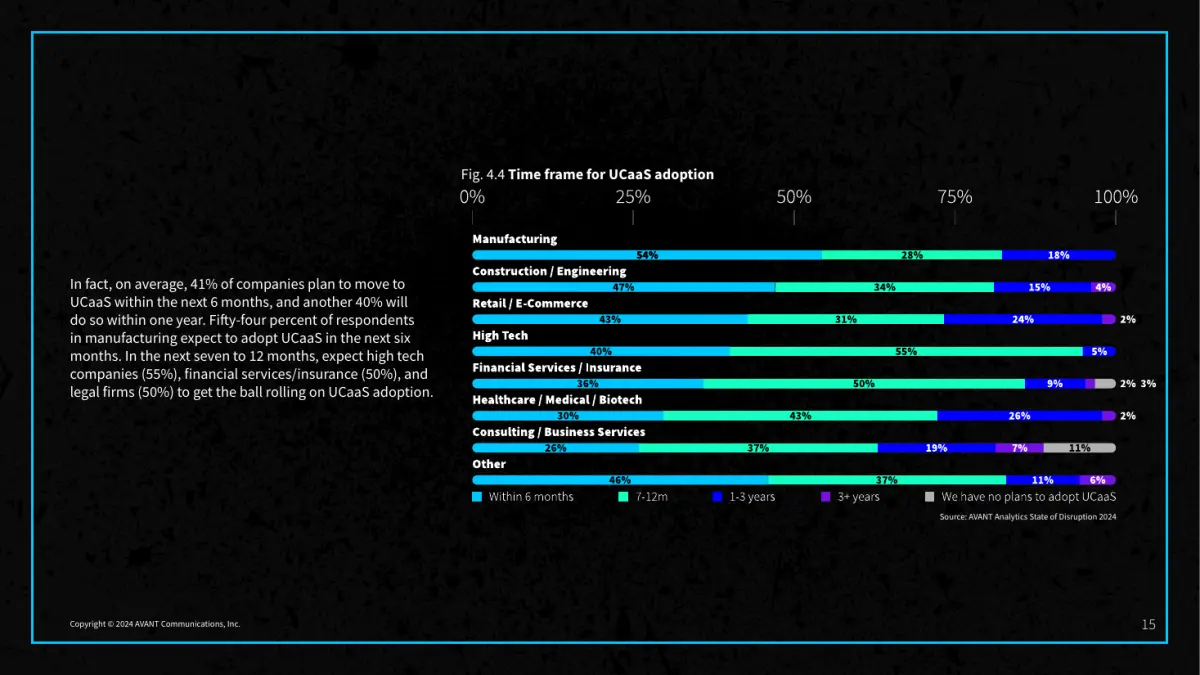
The learning curve of a new system was a leading reason for delaying migration. User experience, training and change management therefore deserve attention alongside platform functionality. On average, 41% of companies planned a move within six months and another 40% within a year.
CCaaS expands multichannel customer service
Contact center as a service supports customer interactions through channels including phone, email, chat, social media and video. Conversational and generative AI were influencing chatbot development and the capabilities buyers considered.
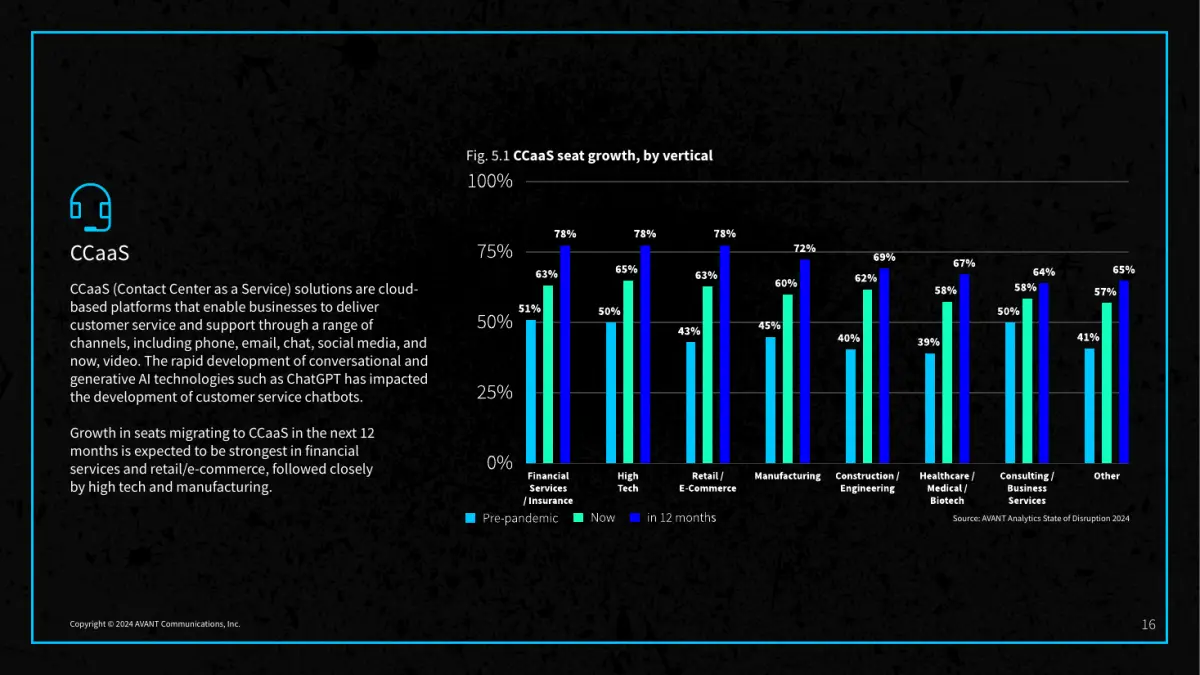
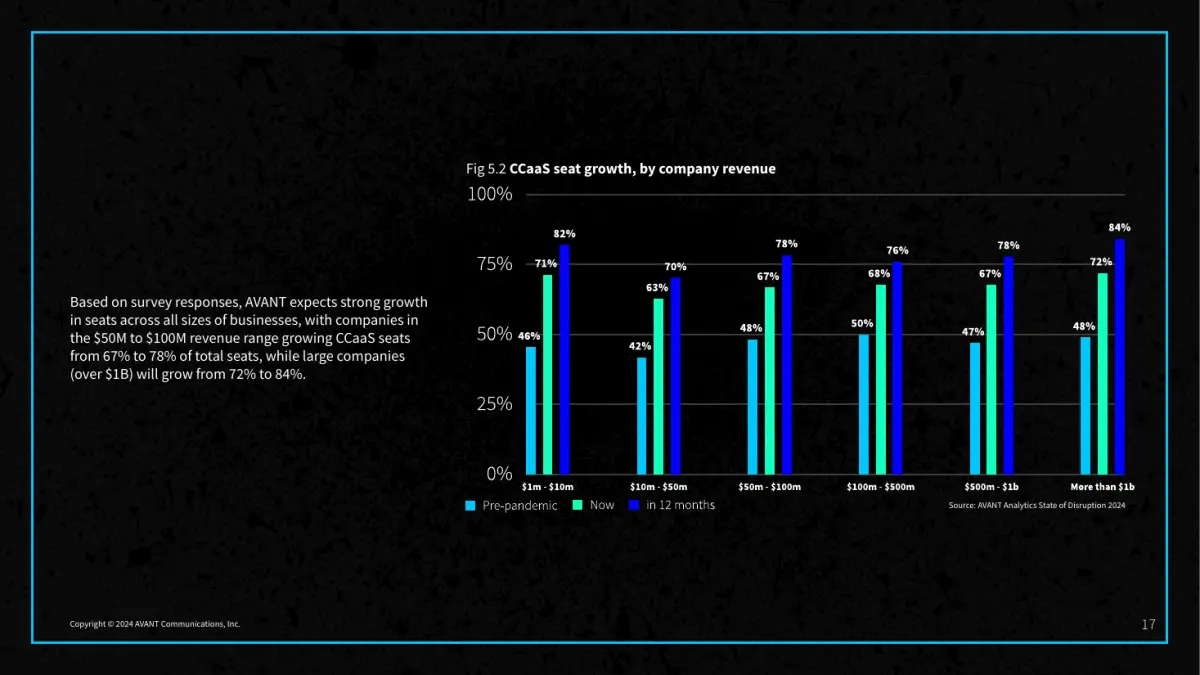
Expected seat migration was strongest in financial services and retail/e-commerce, followed by high tech and manufacturing. Companies with revenue of $50 million to $100 million anticipated cloud contact center seats rising from 67% to 78% of their total; those above $1 billion expected an increase from 72% to 84%.
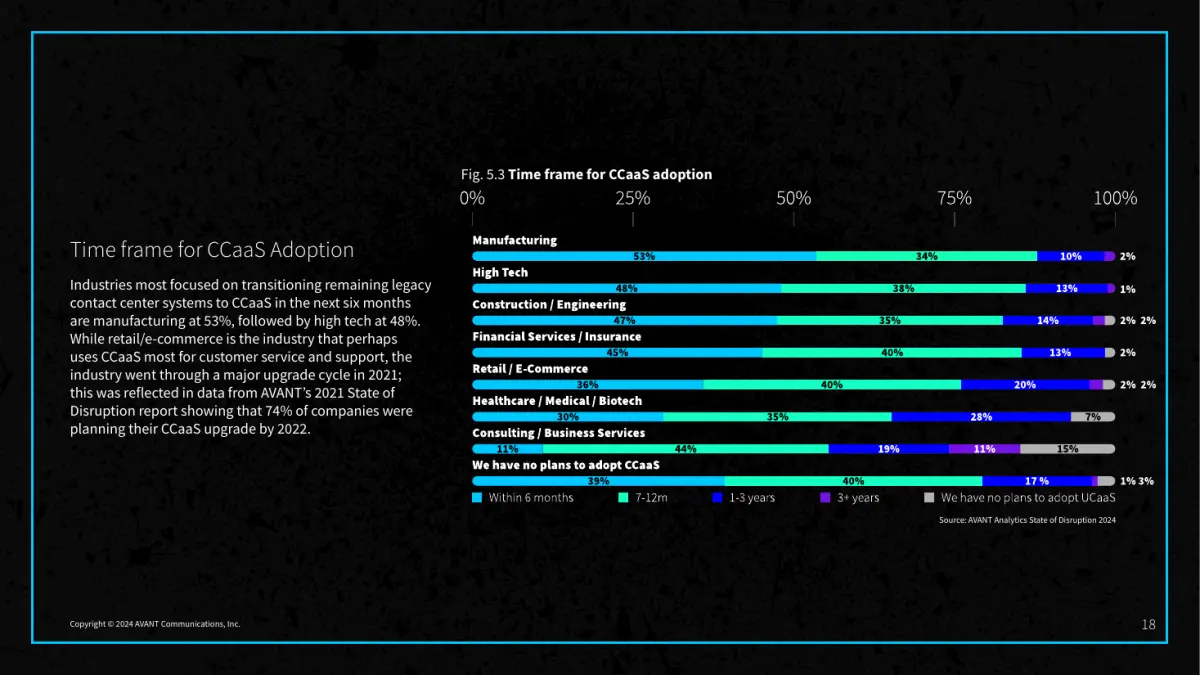
Manufacturing and high tech showed the strongest near-term intention to transition remaining legacy systems, at 53% and 48% respectively within six months. Retail’s outlook followed an earlier upgrade cycle documented in AVANT’s 2021 report.
IaaS adoption grows while legacy environments persist
Infrastructure as a service offers flexible capacity, consumption-based billing and provider-managed infrastructure. The report discusses hybrid and multicloud strategies as ways to balance control, scalability, flexibility and dependence on individual providers.
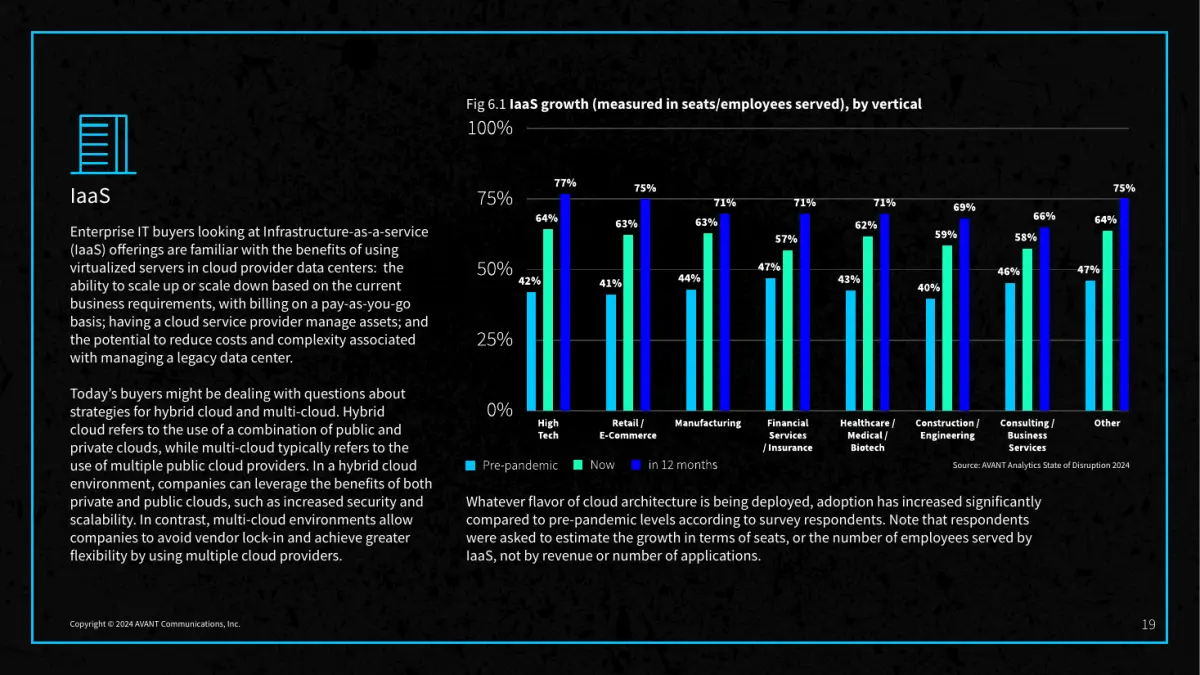
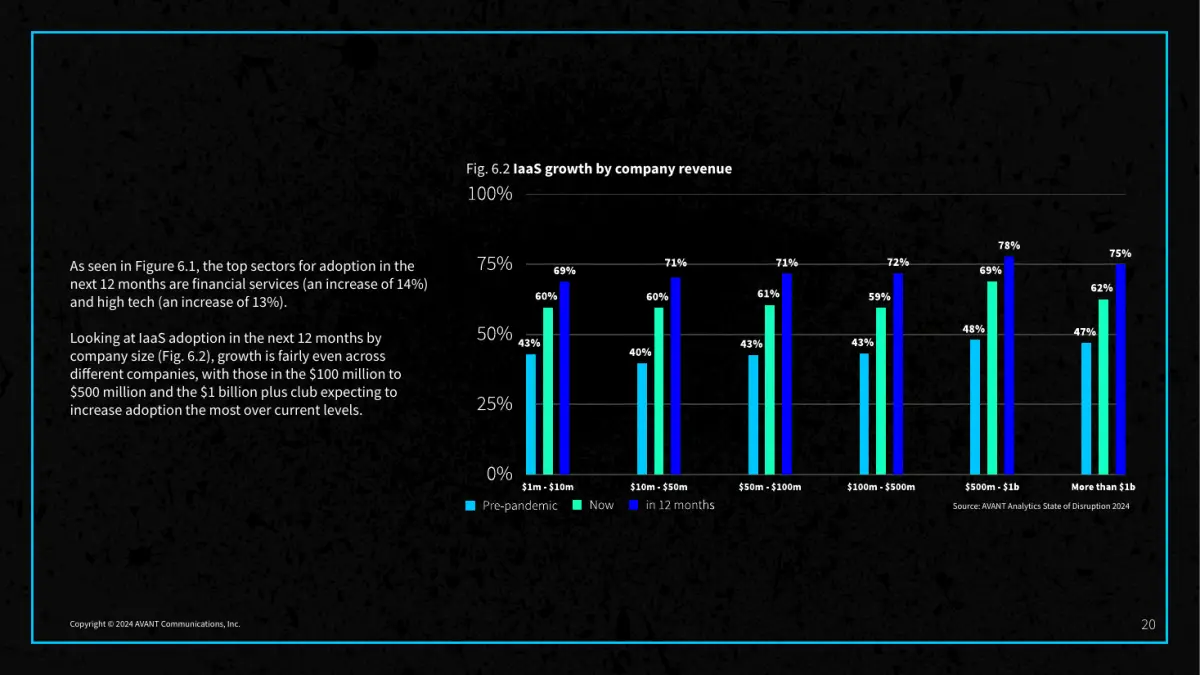
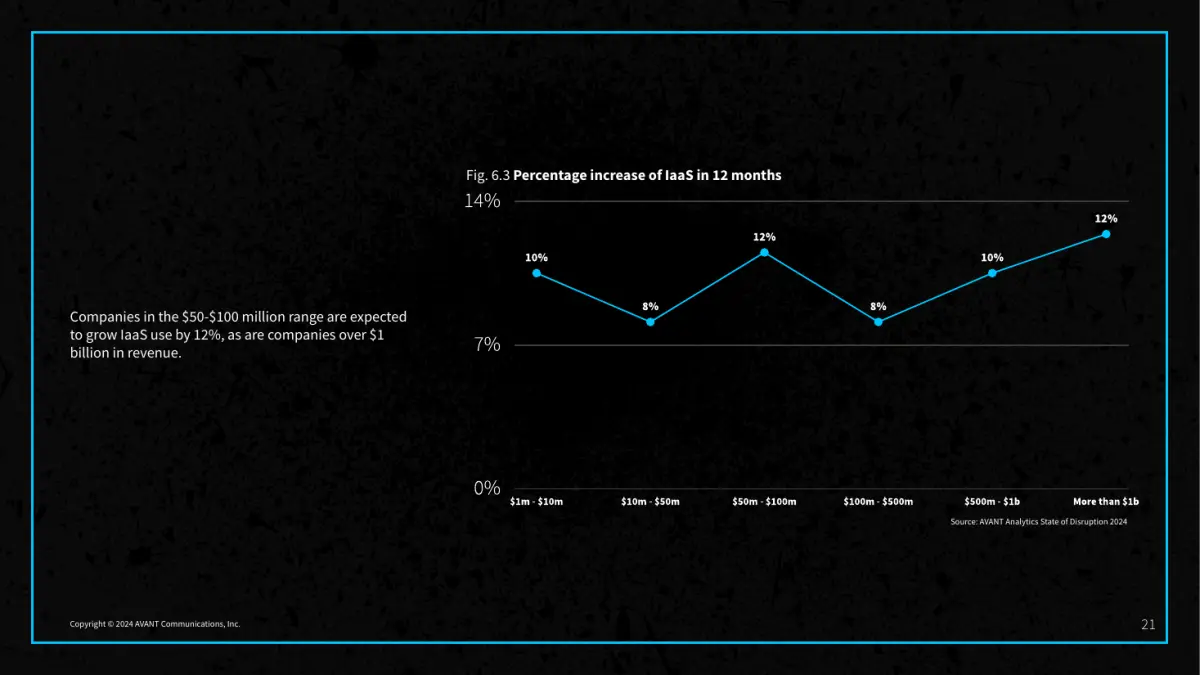
AVANT measured IaaS adoption by seats or employees served, not revenue or application counts. Financial services and high tech led expected growth, with reported increases of 14% and 13% over the next 12 months. Companies with $50 million to $100 million in revenue and those above $1 billion each anticipated 12% growth in use.
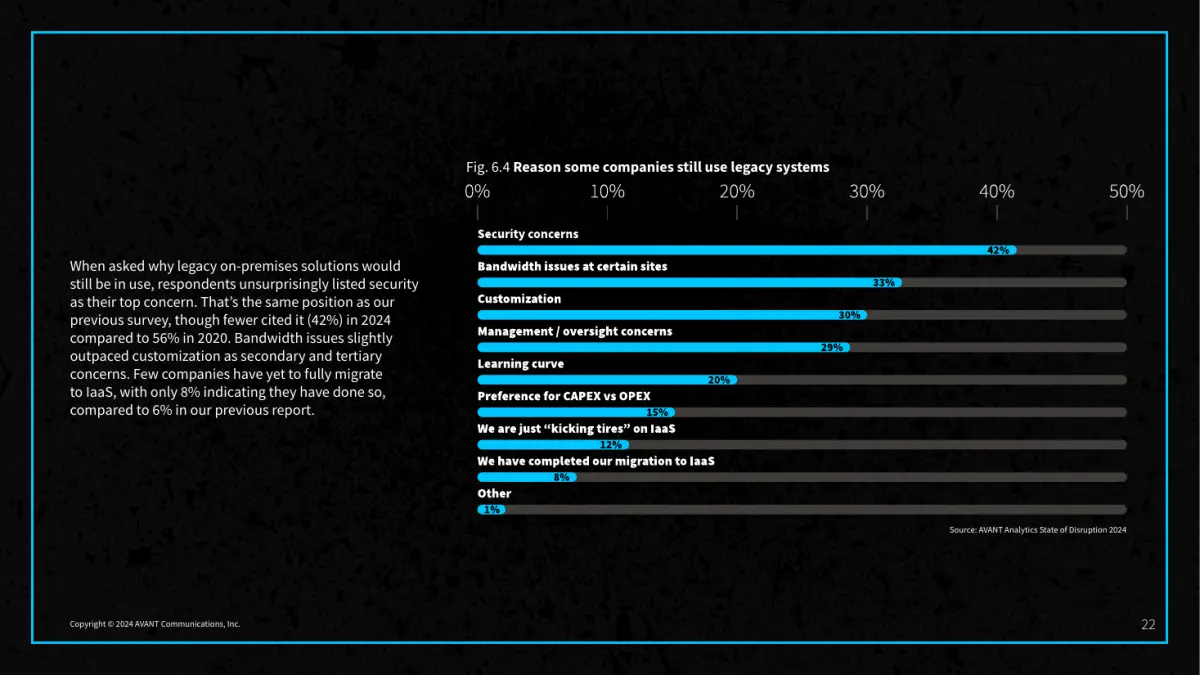
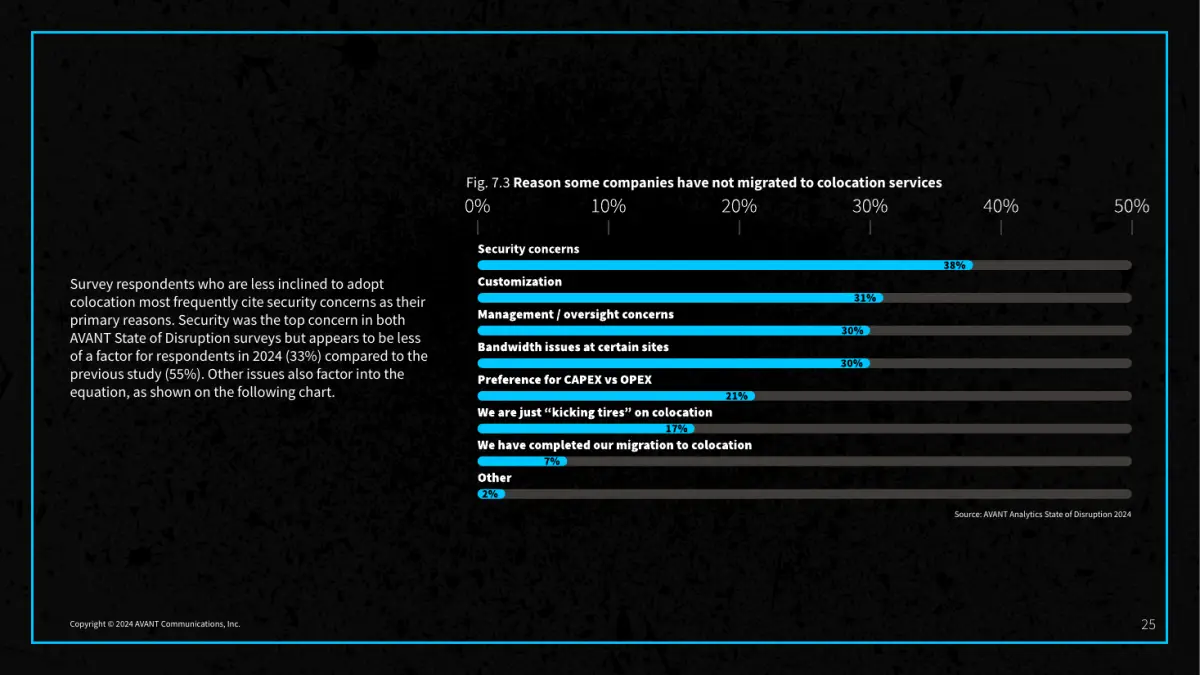
Only 8% indicated that they had fully migrated to IaaS, compared with 6% in the previous report. Security remained the leading reason for retaining on-premises systems, cited by 42%, followed by bandwidth and customization concerns.
Colocation provides another route beyond on-premises facilities
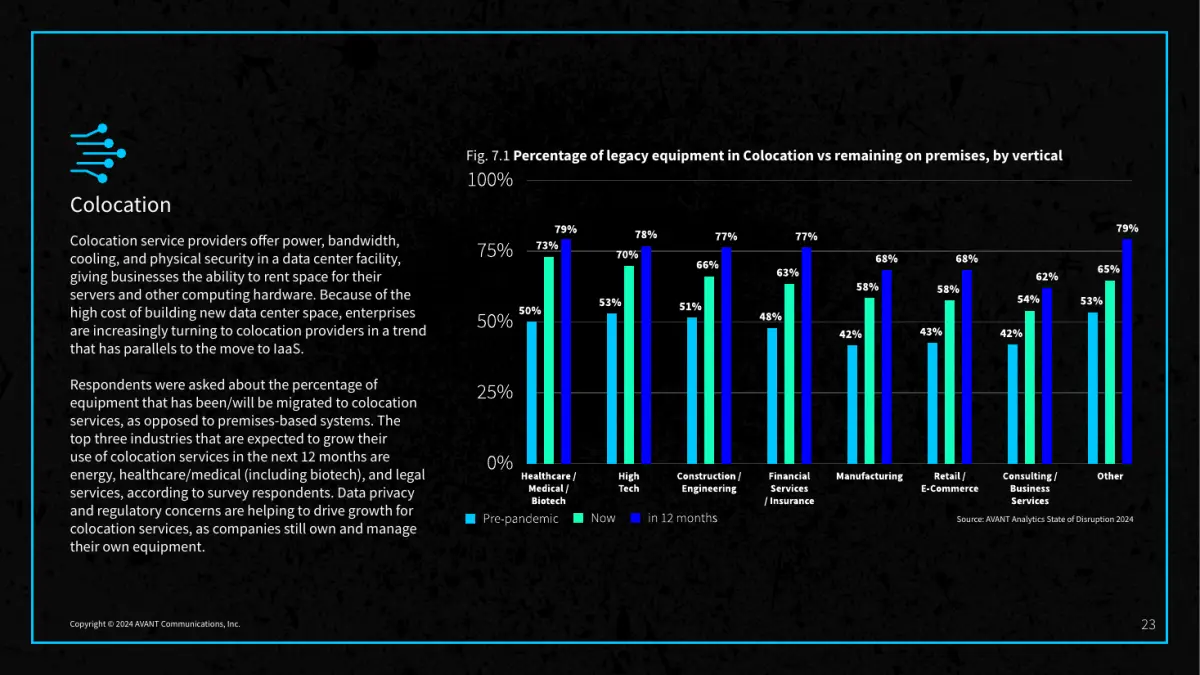
Colocation gives organizations access to facility power, cooling, bandwidth and physical security while they retain ownership and management of their equipment. The report links its appeal to the cost of building data center capacity and to privacy and regulatory requirements.
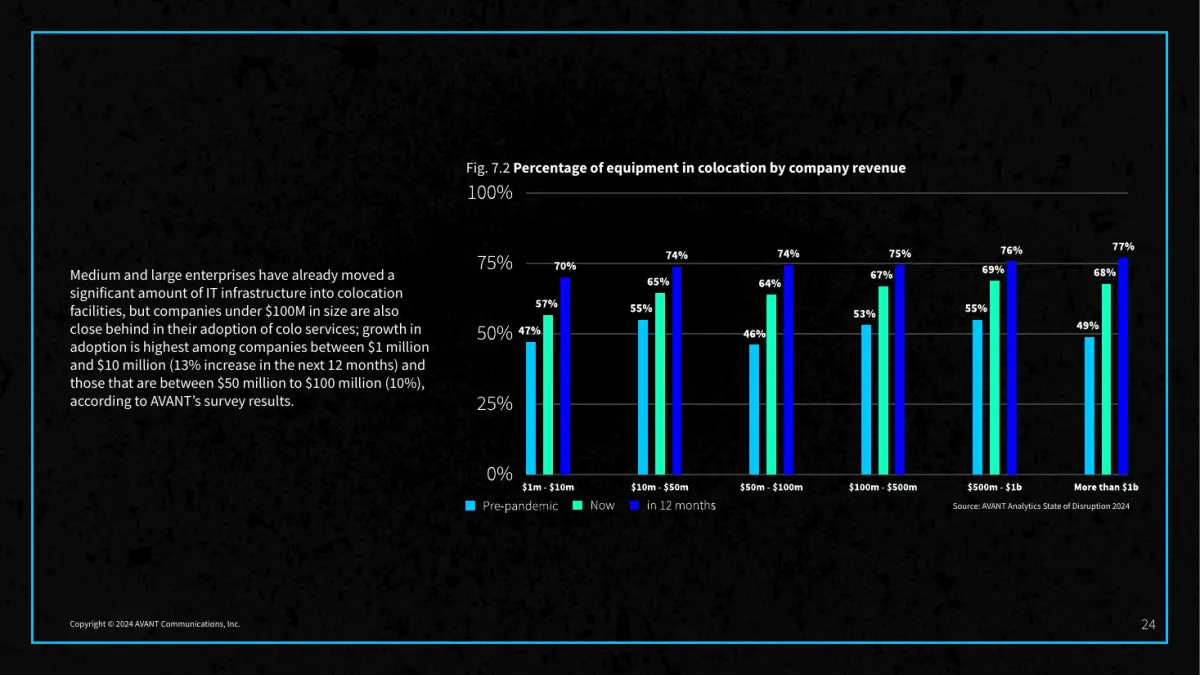
Energy, healthcare and medical businesses including biotech, and legal services had the strongest expected growth in equipment migration. Companies with $1 million to $10 million in revenue anticipated a 13% increase in adoption over the next year, while those with $50 million to $100 million anticipated 10%.
Security was the most frequently cited reason for not migrating, but its prominence declined: 33% cited it in the 2024 report, compared with 55% in the preceding study.
SaaS becomes a larger share of the application estate
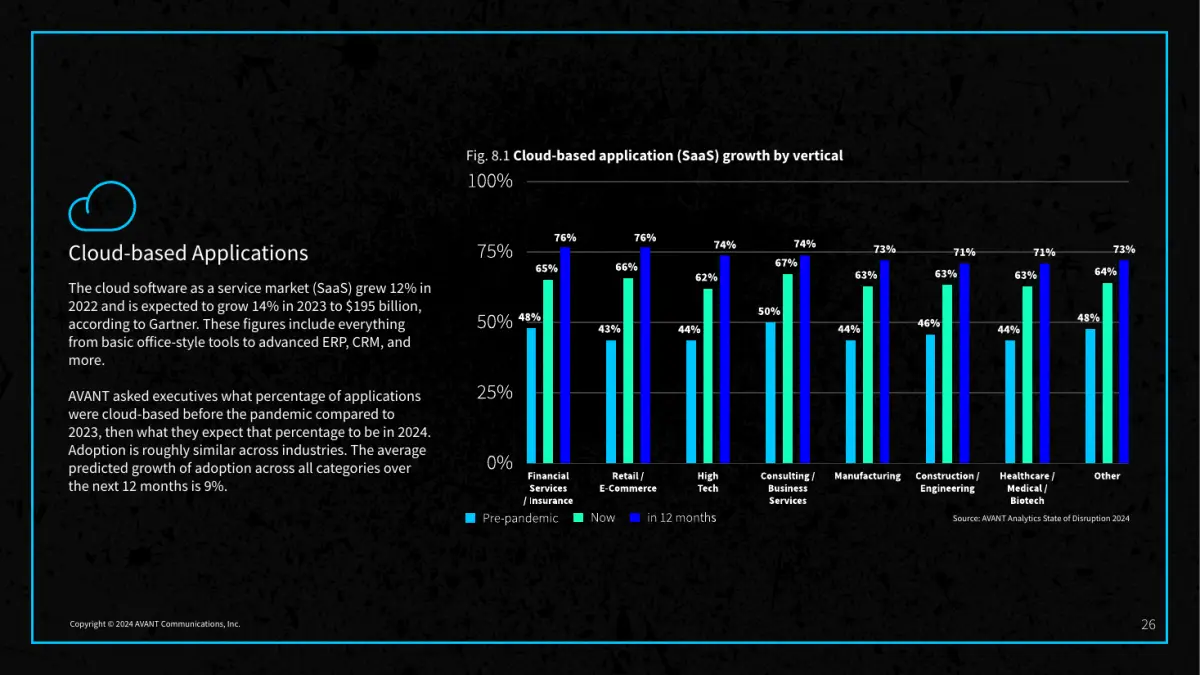
The survey examined cloud-based applications ranging from office tools to enterprise resource planning and customer relationship management. Adoption patterns were broadly similar across industries, with average predicted adoption growth of 9% over the following 12 months.
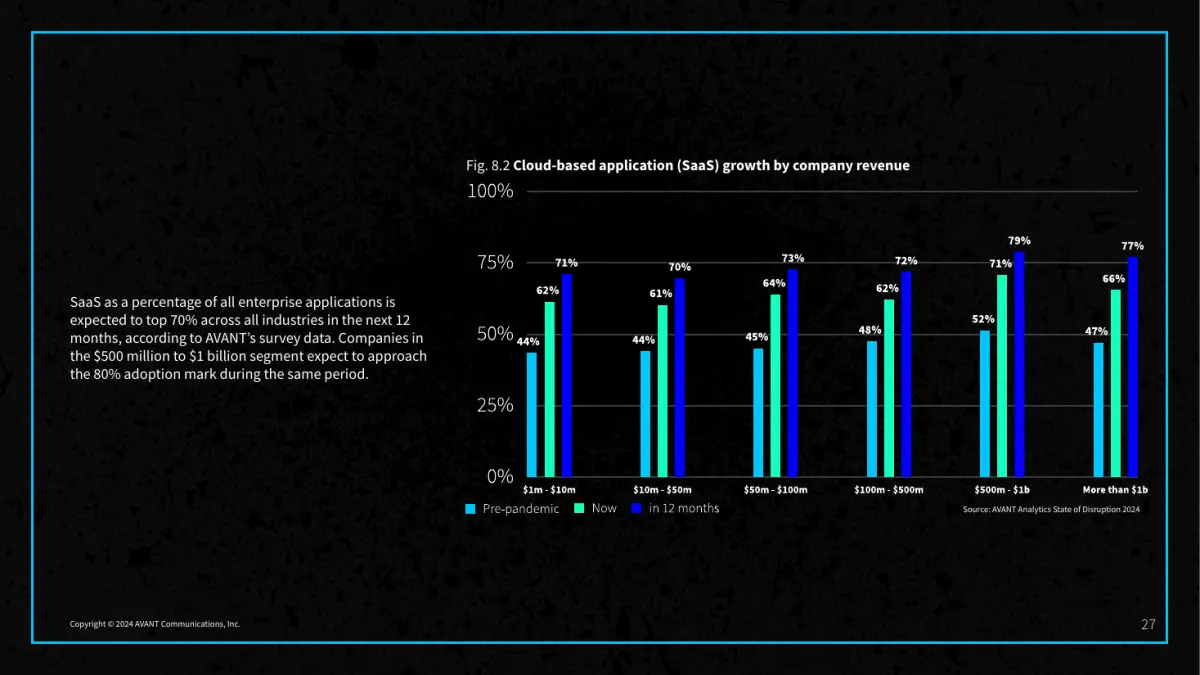
Respondents expected SaaS to exceed 70% of enterprise applications across all industries during that period. Companies with $500 million to $1 billion in revenue expected to approach 80%. These figures describe the anticipated application mix rather than SaaS spending growth.
Security confidence does not eliminate readiness gaps
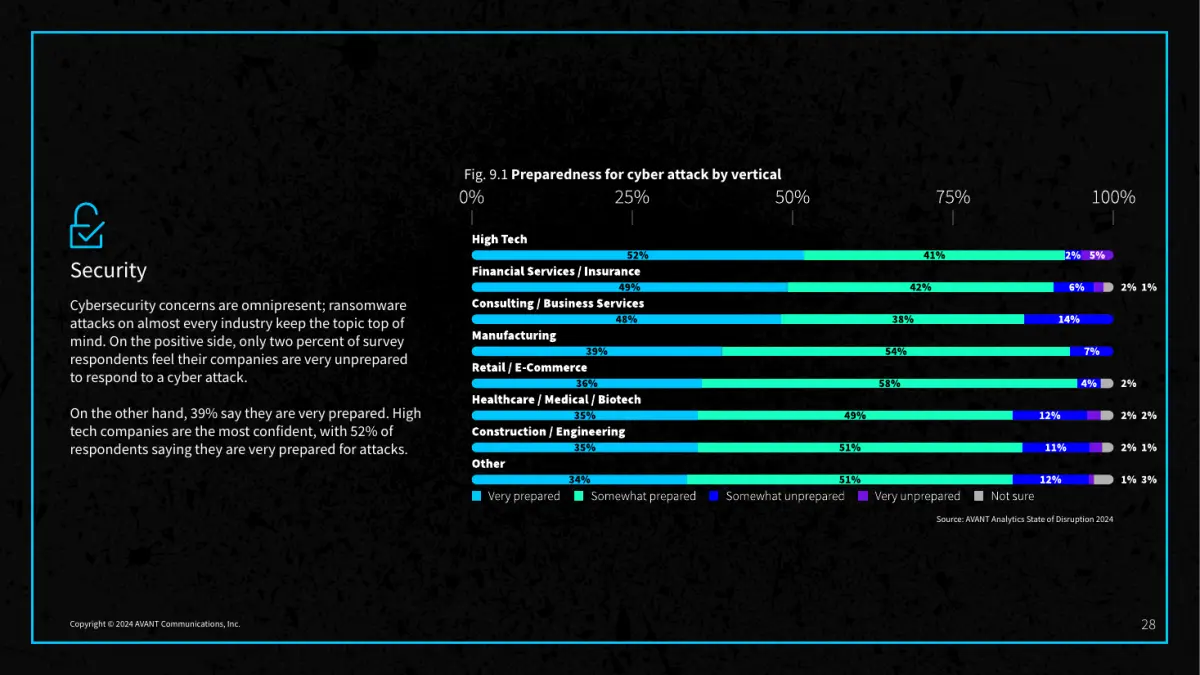
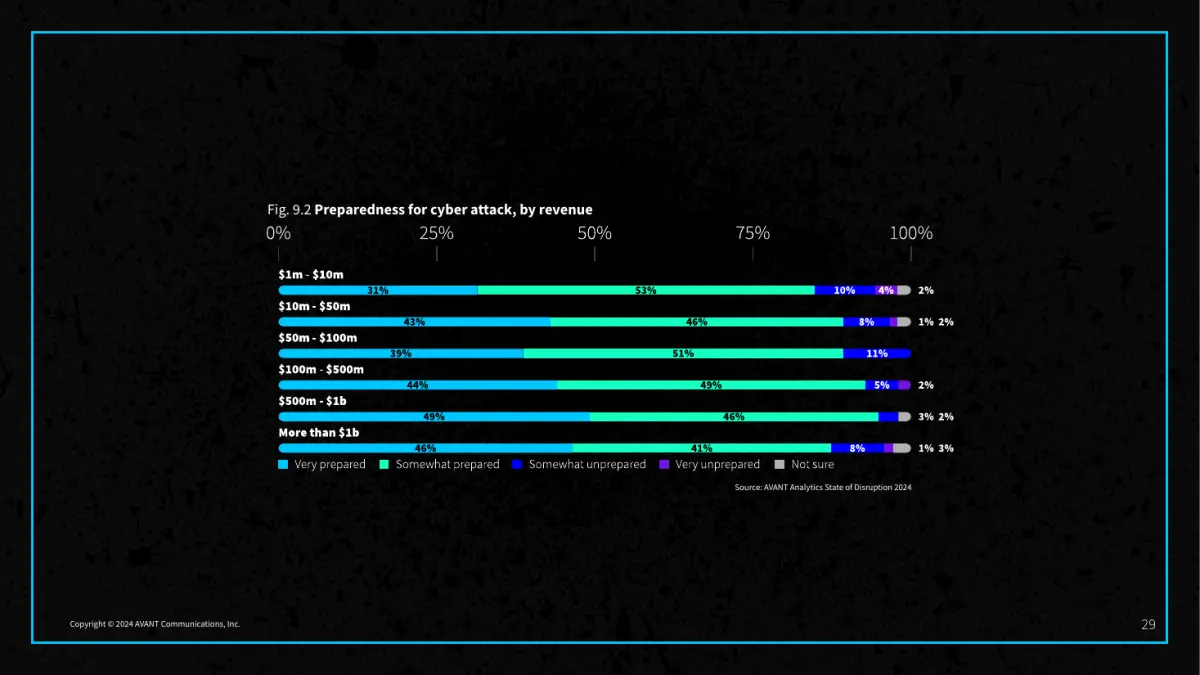
Only 39% of respondents described their organizations as very prepared for a cyberattack; 2% felt very unprepared. High-tech respondents were the most confident, with 52% reporting that they were very prepared.
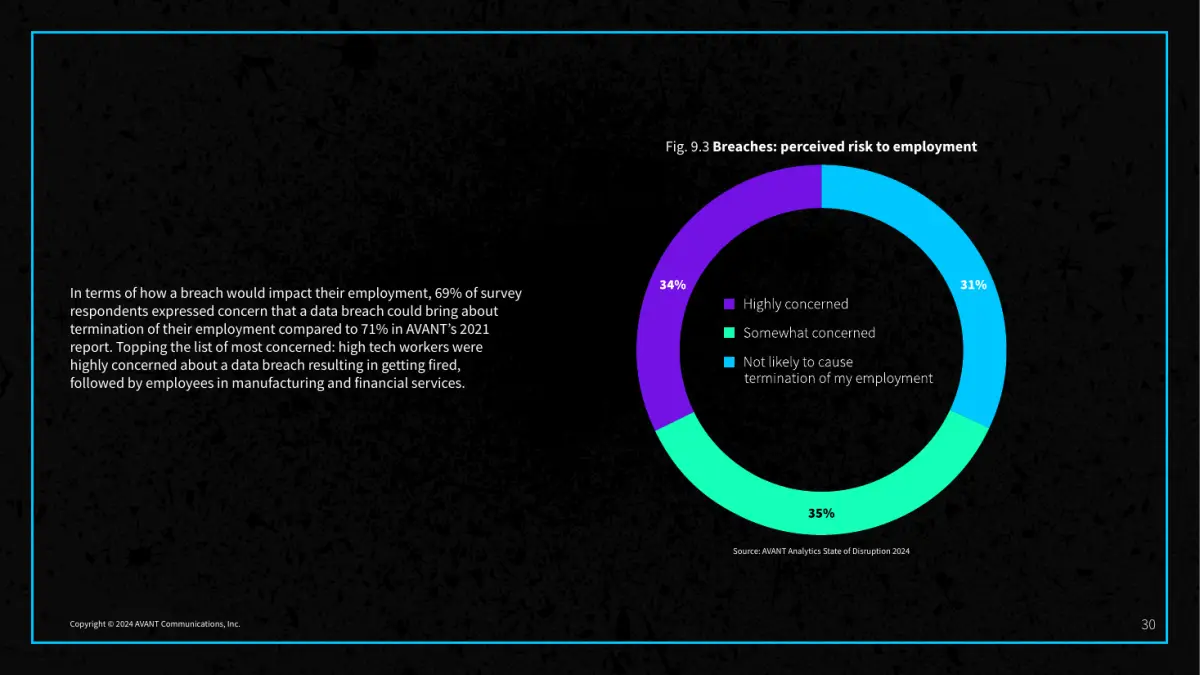
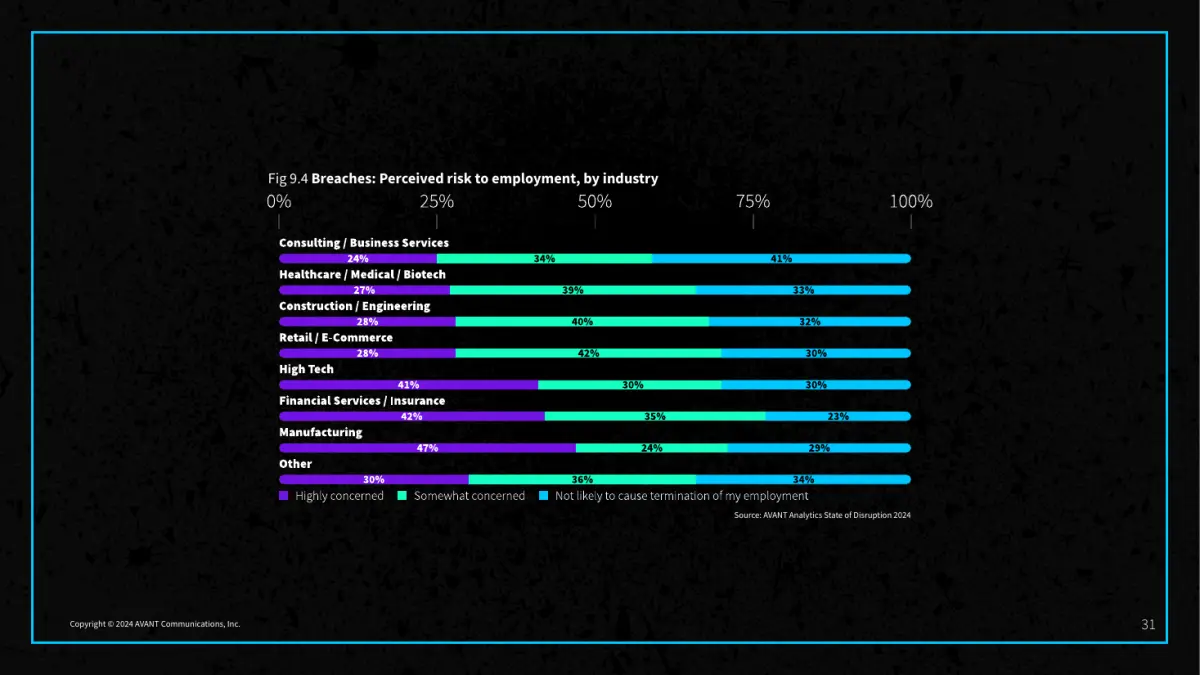
Personal accountability was also prominent: 69% feared or somewhat feared that a breach could cost them their job, compared with 71% in the 2021 report. High tech, manufacturing and financial services were among the most concerned groups.
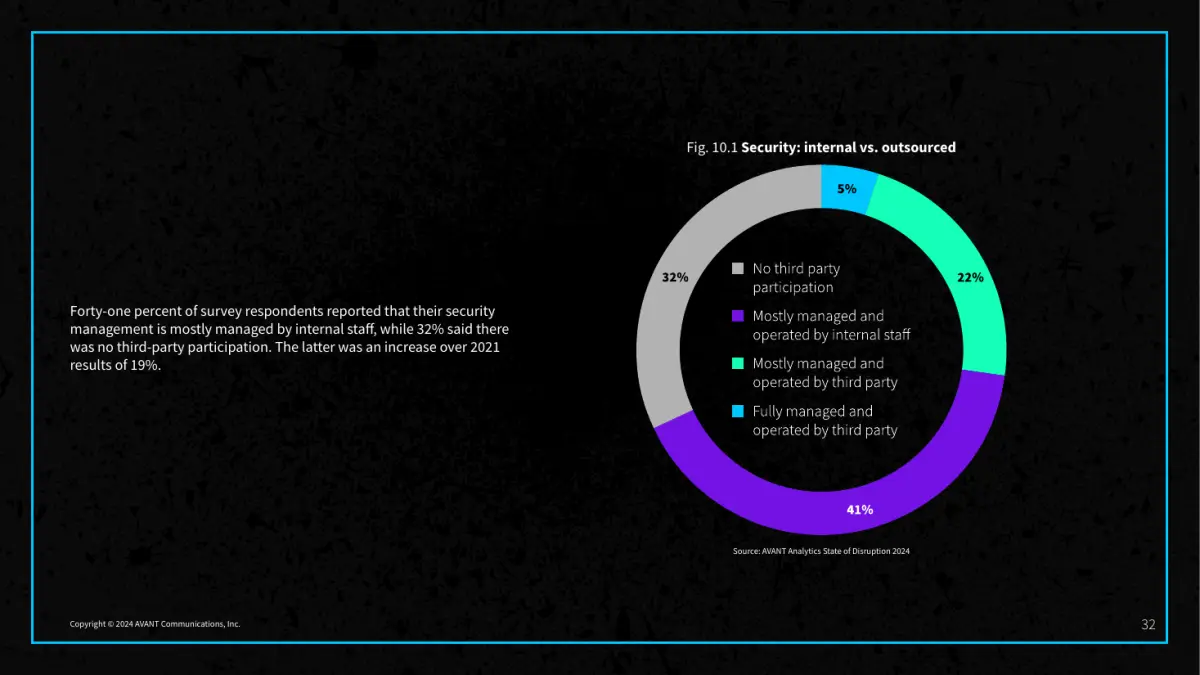
The detailed security section reports that 41% mostly managed security through internal staff and 32% had no third-party participation, up from 19% in 2021. The executive summary describes that 32% differently, so the report’s outsourcing figures should be treated cautiously rather than used as an unambiguous adoption benchmark.
Key takeaways
- Benchmark transformation progress against comparable industries and company sizes, not a single market average.
- Treat survey adoption forecasts as planning signals rather than completed migrations or spending measures.
- Include training and user experience in communications migration plans.
- Evaluate IaaS, colocation and SaaS against security, customization and operating requirements.
- Use independent expertise where internal capacity or specialist skills constrain implementation and security readiness.
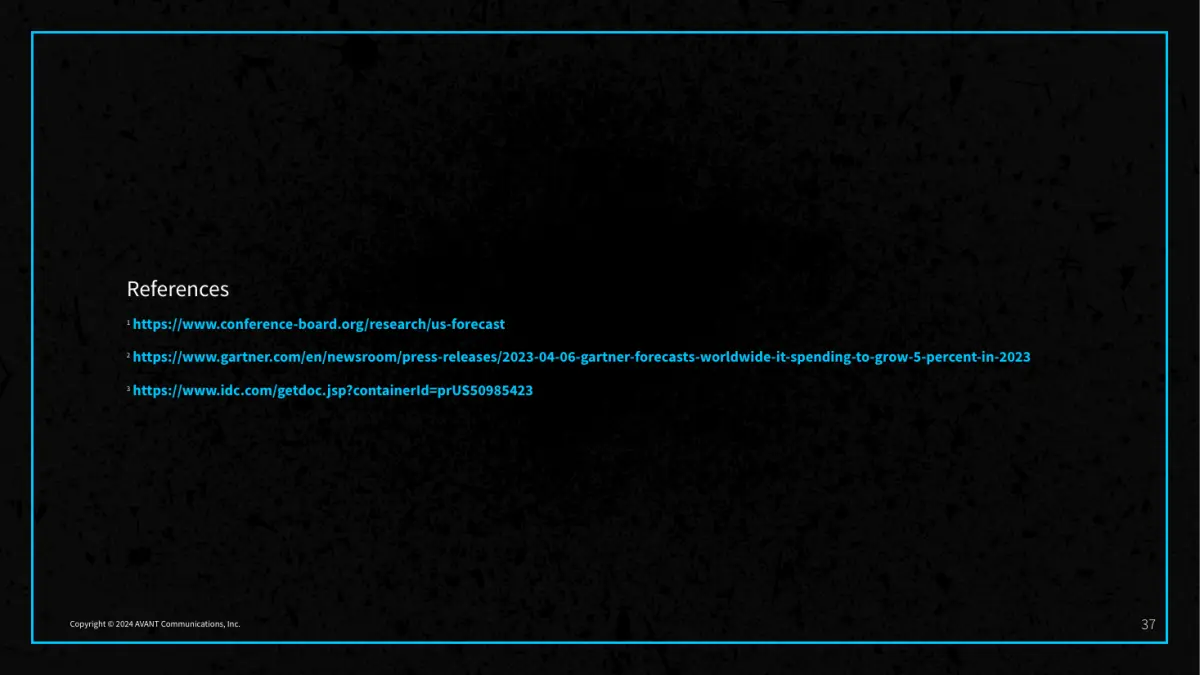
AVANT Analytics, State of Disruption 2024, version 1.1. Primary research: 501 U.S.-based enterprise technology decision makers, weighted by company employee count. The report also cites the Conference Board, Gartner and IDC. Adoption projections reflect expectations at the time of the survey, not independently verified subsequent results.
View the original document (42 pages)